What is Vision Therapy ?
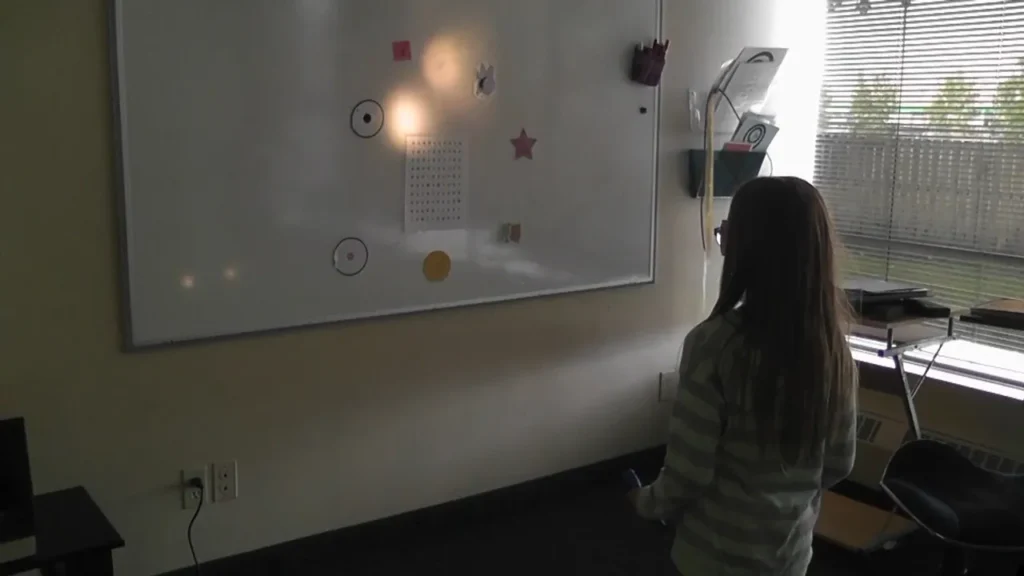
Vision Therapy is a personalized, doctor-supervised program. It helps improve eye movement, eye focusing, eye teaming, and visual processing skills.
Each session includes guided activities. These activities train the brain and eyes to work together more efficiently for reading, learning, and daily tasks.
Eye alignment
Tracking control
Focusing ability
Smooth movements
In addition, visual-motor skills and endurance are developed through specialized computer and optical activities. These may include therapeutic lenses, prisms, and filters.
During the final stages of therapy, patients practice their new visual skills again and again. As a result, these skills can become more automatic and easier to use in daily life.
Learning Visual Skills is Like Learning to Ride a Bicycle
Learning visual skills is similar to learning how to ride a bicycle. At first, the process may feel difficult and tiring. It takes effort to coordinate the body, maintain balance, and control movement.
However, with practice, the skill becomes easier. Over time, the body learns how to respond more automatically. As a result, riding a bicycle feels natural.
This program works in a similar way. The goal is to help visual skills become more automatic and efficient. These skills may include eye focusing, eye teaming, eye tracking, and visual processing.
For example, automatic visual skills are important during reading. When the eyes work together more smoothly, the brain can focus more on understanding the text.
Why Vision Therapy?
Some visual conditions cannot be fully corrected with glasses, contact lenses, or patching alone. In these cases, Vision Therapy may help improve the visual skills needed for reading, learning, and daily activities.
20/20 sight does not mean that your visual skills are working efficiently.
Read more about the 20/20 Myth.
For example, a child may pass a basic eye exam but still struggle with visual skills needed for reading and learning.
Learning Related Vision Problems
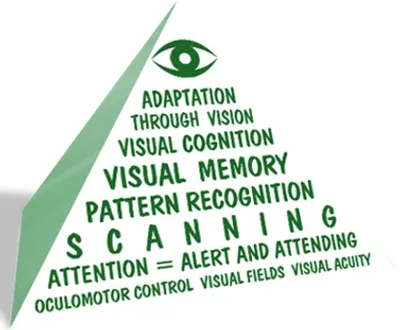
For many patients, therapy can help build the visual skills needed for reading, writing, and learning. For example, these skills may include eye movement, focusing, convergence, eye-hand activity, and visual memory.
To learn more about learning-related vision problems, visit any of these web pages:
20-20 Eyesight and 20/20 Eye Screenings – Not Perfect for Learning and School
Learning Related Vision Problems and Attention Deficit Disorders (ADD/ADHD), Dyslexia, and Learning Disabilities (LDs)
Eye Tracking Dysfunction
People with eye tracking difficulties may lose their place while reading. As a result, they may skip words, skip lines, or read words in the wrong order.
For example, a child may use a finger, bookmark, or paper window to stay on the correct line. Some children also move their head or nose while reading.
As a result, reading can feel slow and tiring. Vision Therapy may help improve tracking skills so the eyes can move more smoothly across a page.
Binocular Coordination / Accommodative Disorders
These conditions can contribute to double vision, moving print, or the appearance of gaps and rivers in the text while reading. However, all of these symptoms can occur even when a person has 20/20 eyesight.
In this area, therapy helps improve coordination and teamwork between the two eyes. This is called binocular vision.
When the two eyes do not work together as an effective team, performance can suffer in many areas. For example, reading, sports, depth perception, and eye contact may become more difficult.
Common binocular coordination problems include convergence insufficiency and convergence excess.
Convergence insufficiency means the eyes have trouble staying aligned for near work. Convergence excess means the eyes may turn in too much during near tasks, such as reading.
In addition, focusing problems can make it harder to shift focus between near and far targets.
These skills are important at school when copying material from a screen. They are also important in sports, such as hockey, when a goalie must quickly shift focus from the area nearby to an opposing defenseman on the blue line.
Lazy eye such as Amblyopia and Strabismus (cross-eyed, wandering eye)
For some patients, therapy may support better outcomes for turned eyes, lazy eye, amblyopia, or strabismus. In many cases, it can be an important part of treatment along with, or after, glasses, patching, or other management options.
Often, the earlier a patient receives Vision Therapy, the better the outcome may be. However, our office also treats older children, teens, and adults, including patients over 21 years of age.
For infants and toddlers, a different initial management approach may be recommended. As they get older, a more active Vision Therapy program may become part of their treatment plan.
Recent scientific research has challenged the long-held belief that children with lazy eye, or amblyopia, cannot be helped after age 7. As a result, treatment options may still be worth exploring beyond early childhood.
Sports Vision Visual Training
Strong visual skills are critical to sports success. After all, not much happens in sports until your eyes tell your hands and body what to do.
For example, we can measure and improve eye-hand coordination, visual reaction time, peripheral vision, eye focusing, eye tracking, eye teaming, and visualization skills.
In many sports, even a small improvement in reaction time can make a difference. Therefore, stronger visual skills may provide a valuable competitive advantage.
Post Concussion / Traumatic Brain Injury
Visual symptoms are common after a TBI or concussion. In many cases, we work with your vestibular therapist, physiotherapist, or allied health professional to support your recovery.
However, a clear MRI does not always mean that visual function is normal. Some people still experience visual problems after a concussion, even when standard testing looks clear.
Important Information For Those Considering Enrolling In A Vision Therapy Program
This program requires commitment. It is not something we can do for you.
However, we will guide you through the experiences needed to develop or rehabilitate visual skills. You still need to take an active role in the process.
Before starting Vision Therapy, it is important to commit to the following:
Be present – You need to be physically and mentally present at each therapy session.
Be on time – Each therapy session includes many important activities. Arriving late can reduce the time available for treatment.
Practice at home – Home skill development is an important part of progress. As the expression goes, “practice makes perfect.”
In addition, home practice should be done correctly and as often as your therapist recommends. Without regular practice, progress may be slow.
Our goal is to help you succeed. Therefore, we are clear about this before you make a financial commitment to a Vision Therapy program.